
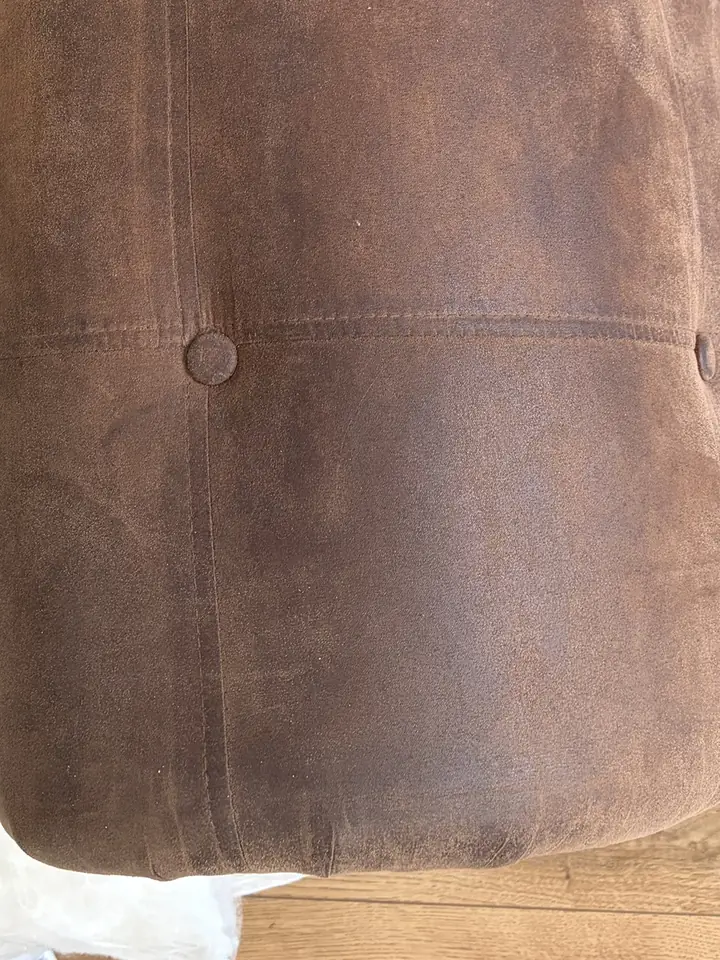
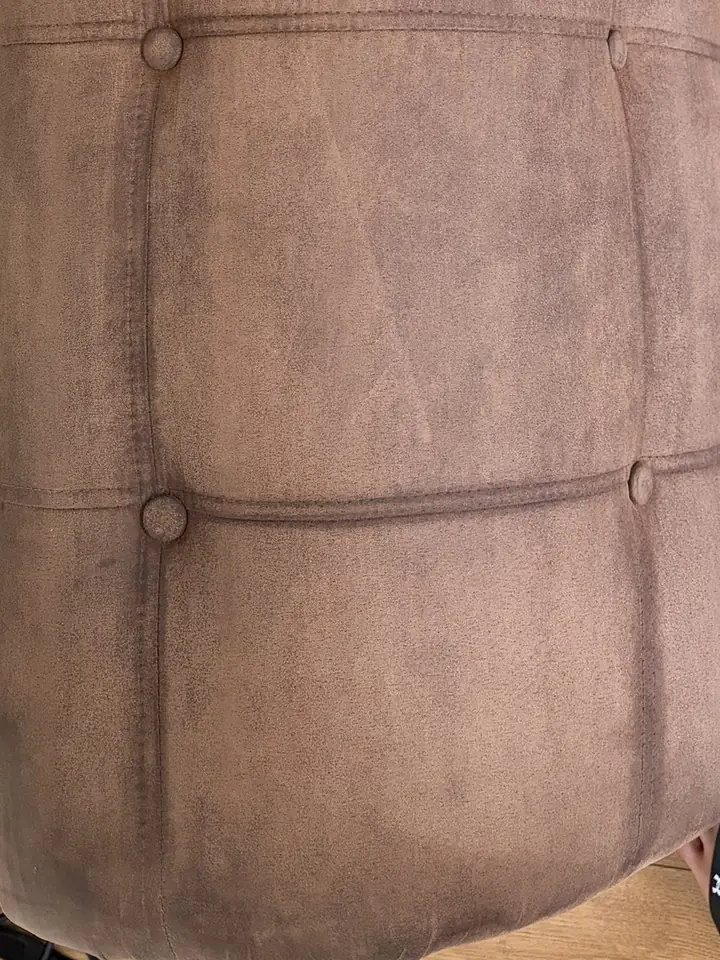
This one is a bit different from our usual guides. It is not about a customer's home. It is about my own sofa, the faux suede one in our living room, and how I got the arms looking decent again with a bit of time and patience. I am sharing what worked for me, with the honest caveat that every fabric is different.
Why faux suede arms go dark
If you have a faux suede or microfibre sofa, you have probably noticed the arms and headrests going darker and slightly shiny over time. That is mostly body oils from hands, arms and heads, along with a bit of hand cream, hair products and general everyday grime. The oil sits in the nap and attracts dust, so the patch slowly gets darker. It is not usually a stain as such, which is good news, because it tends to respond well to gentle cleaning.
Step 1: check the care label first
Before anything else, find the label (usually under a seat cushion or on the base) and look for the cleaning code:
- W means water-based cleaners are fine.
- S means solvent-based cleaner only. Water can leave rings on these fabrics.
- W/S means either is fine.
- X means vacuum only. Do not use water or solvents. This one is best left to a professional.
Mine was W, so I used a water-based method. Whatever your code, test your method on a hidden spot first, like the back or underside of a cushion, and let it dry before going near the arms.
Step 2: vacuum properly
I gave the whole sofa a good vacuum with the upholstery tool, paying attention to the seams and the creases where the arms meet the seats. If you skip this, you end up pushing crumbs and grit around in wet fabric, which is no fun.
Step 3: keep the cleaning mild
You do not need anything strong. Warm water with a small amount of upholstery shampoo, or a drop of washing up liquid, is enough for most oily marks. If you own an upholstery cleaning machine or a handheld spot cleaner, that makes the rinsing and extraction much easier, but a couple of clean cloths will do the job.
Step 4: work in small sections and do not soak it
This is the bit that matters most. I worked on one small patch of the arm at a time, applying a little solution with a damp cloth (or a light spray from the machine) and working it in gently. The aim is to clean the surface fibres, not to soak the foam underneath. Wet foam takes ages to dry, can leave water marks and can smell musty.
Step 5: blot and extract
Straight after each section, I blotted firmly with a clean, dry cloth to lift the dirty moisture out. With a machine, a couple of slow dry passes does the same job. You will see the grime coming out on the cloth, which is quite satisfying. Swap to a fresh area of cloth often.
Step 6: brush the nap while it is damp
Faux suede can dry a bit stiff or patchy if you leave it. While it was still damp, I brushed the arm gently with a soft brush in one direction so the fibres would dry evenly.
Step 7: let it dry fully
I opened a window and ran a fan on it for an hour or two, then left it to finish drying naturally. Keep heat away from it: no hairdryers or radiators pushed up against it, as heat can mark or harden some synthetic fabrics. Try not to sit on it until it is fully dry.
Step 8: brush again once dry
Once dry, a final light brush softened the nap right back up and it felt like the rest of the sofa again.
What I would avoid
- Bleach or strong household cleaners. They can strip colour and damage the fibres.
- Oversaturating. More water is not better. It just soaks the foam and can leave rings.
- Heat. Let it air dry.
- Scrubbing hard. It can rough up or flatten the nap. Gentle and patient works better.
An honest note
This worked well on my sofa, as you can see in the photos, but results vary depending on the fabric, how old the marks are and what caused them. Some fabrics are more delicate, some marks are more stubborn, and some sofas simply will not suit a DIY clean. If in doubt, check the label, test first and go gently.
If you would rather not do it yourself, we do sofas too.